Is AI Making Developers Worse? Yes, and They're Worth More
Unpopular opinion: AI coding agents are making developers worse, and I love it.
I can’t imagine coding without AI agents anymore. Honestly, I’d be bored out of my mind. Yes, I love playing with these tools, and if I lose some low-level skills along the way, so be it. I’ve lost plenty of skills before (who remembers Arduino assembly or advanced calculus from university?).
At the same time, developers are becoming more valuable.
The Expertise Paradox
These AI tools are practically useless for serious software development unless you already have deep technical expertise. What I’m really doing is using my entire career to become more productive.
The code these agents produce is often garbage. And you’ll hit a wall fast without an architect’s mindset.
I’ve watched junior developers struggle with AI tools in ways that senior engineers don’t. The seniors’ edge has little to do with prompting. They know:
- What questions to ask
- What architecture makes sense
- When the generated code is subtly wrong
- How to debug the inevitable issues
Subtly wrong is the normal case. In the 2025 Stack Overflow Developer Survey, the top frustration with AI tools was “AI solutions that are almost right, but not quite,” and more developers said they distrust the accuracy of AI output than trust it.
| From the 2025 Stack Overflow survey | Share |
|---|---|
| AI solutions that are almost right, but not quite | 66% |
| Debugging AI-generated code is more time-consuming | 45% |
| Distrust the accuracy of AI output | 46% |
| Trust the accuracy of AI output | 33% |
The 2026 survey, with 30,903 responses, drew the line more precisely: 48% trust AI when they can easily validate the answers, and only 16% extend that trust to most tasks short of important work decisions. Spotting “almost right” takes exactly the knowledge the tool can’t give you. The cheapest check I know is tests, and when I let Claude write the tests too, about 15% of them failed on the first run because the code was wrong.
What AI agents multiply
AI agents multiply whatever force you bring to them. They amplify what you already know, and they can’t make the system design or architecture decisions for you.
A better comparison than calculators replacing arithmetic is power tools replacing hand tools. You still need to know carpentry to build a house, but now you can build faster.
The research is messier than either side admits. GitHub’s controlled experiment found developers with Copilot finished an HTTP server task 55.8% faster, and in that study the less experienced developers benefited most. That cuts against my point, but it was one small, well-defined task written from scratch. Day-to-day work on a big codebase you know well looks more like METR’s July 2025 trial: 16 experienced open-source developers on their own mature projects took 19% longer with AI allowed, while believing it had made them 20% faster. (I wrote about what that trial means for craft versus shipping.) METR tried to rerun it in late 2025 with 57 developers and more than 800 tasks. Its February 2026 update estimated an 18% speedup for the developers who returned from the first study and 4% for the new ones, and both confidence intervals still reach a 9% slowdown. METR called its own data unreliable, mainly because so many developers declined to take part rather than work without AI. I don’t read any of these studies as proof that AI is useless or magic. The speedup depends on whether you know enough to steer, and how honest you are about measuring it.
What skills matter now that AI writes code?
I’ll keep using these tools (and loving the productivity boost), but the fundamentals of software engineering matter more than ever. AI just helps us focus on what truly requires human expertise:
- Understanding the problem deeply (AI can write code, but it can’t know what should be built)
- System design and architecture (the 30,000-foot view that makes or breaks projects)
- Code review and quality judgment (knowing when AI output is good enough vs. dangerous)
- Debugging complex issues (AI-generated bugs require AI-augmented debugging skills)
- Business context (why this feature matters, what tradeoffs are acceptable)
Will AI replace junior developers?
The juniors at risk are the ones who let the agent skip the fundamentals. Without them you can’t tell when its output is wrong, and that’s the part of the job the agent can’t do for you. The developers who thrive will be the ones who know enough to make AI actually useful. That rules out both the people who resist it and the people who blindly trust it.
This means investing in fundamentals even as the tools change. Understanding data structures, system design, and architectural patterns matters more than memorizing syntax, because syntax is the part the tool now writes for you.
Practical Takeaways
If you’re wondering how to position yourself, the list above is most of the answer. Two more:
- Work on communication (explaining technical decisions to stakeholders matters more when implementation is faster)
- Keep building real things (the best way to learn AI’s limitations is to hit them)
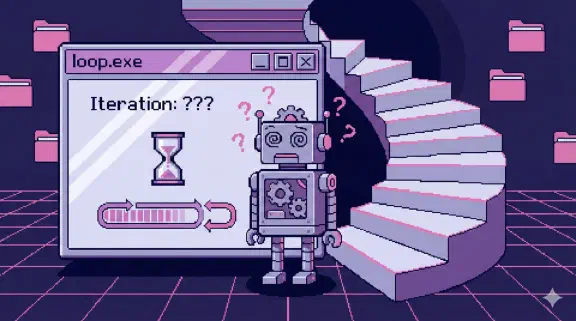
Two limits I’ve hit and written up: models lose count when they have to decide how many times to loop, and they give sharper answers when you make them argue as named experts. The making of my Claude Code guide covers five more prompting lessons from 356 sessions.
If you want to build that fluency faster, I do Claude Code coaching on your own code. Build It Yourself coaching is four 90-minute sessions for $1,997, with up to five people from your team. For what that looks like at company scale, here’s the company brain we run on Claude Code.