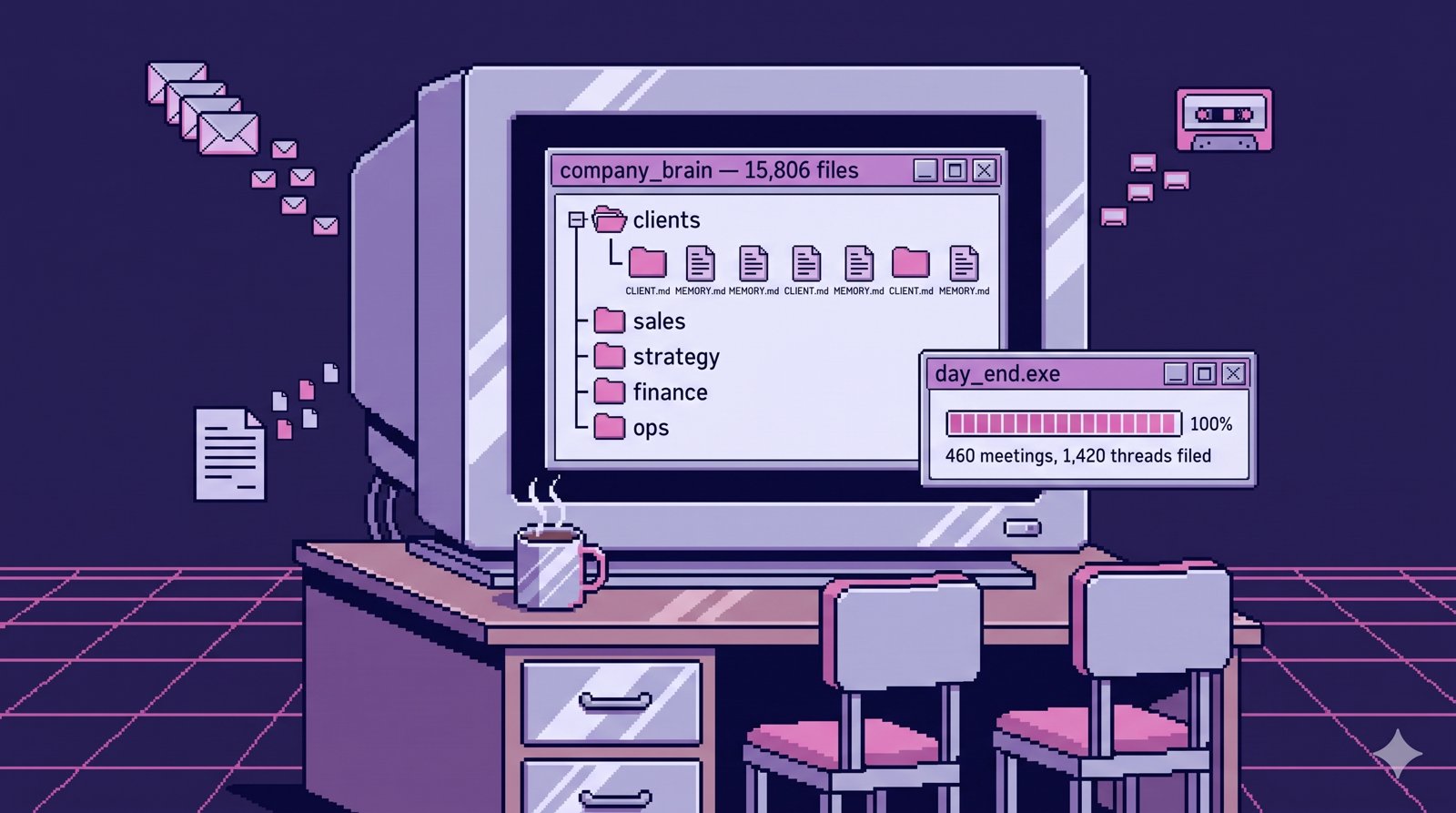
What Is a Company Brain? The One That Runs My Company
Oct 14, 2026 · 8 min read
A company brain is one place AI reads your email, calls and docs, and answers with the source. Here's ours after 3,474 commits, and what still breaks.
Read moreAn AI with three things: your company's context, connections to the tools where the work happens, and skills for the jobs you repeat. So it does more than answer questions about your business. It does the work, and leaves it in your drafts.
Nexrizen's brain, June 4 to September 30, 2026
Written by Gabe Pérez. I run my company on one. Updated October 2026.
Each part is close to useless alone. A skill with no context writes a generic proposal. Context with no skills is a search box. Connectors are how it reaches the work in the first place.
What your company knows: clients, calls, email, prices and the decisions you've made. It arrives on a schedule, so nobody has to remember to paste anything in.
Ours holds 727 call transcripts, 1,295 emails and one log of rulings.
Access to the tools where the work happens: Gmail or Outlook, Drive, Zoom, Notion, QuickBooks. It reads by default, and anything meant for a client stays a draft.
Ours syncs email three times a day and call transcripts every hour.
Written instructions for the jobs you repeat, like turning a call into a proposal or answering a lead with your real prices.
Ours has one command that reads each founder's day, files it and drafts the replies.
The brain is plain files and written instructions in accounts you own, so it isn't tied to one app. Your team reaches it from whichever Claude fits how they work.
Desktop, web or phone. A project holds the instructions, connectors reach your email and Drive, and skills hold the jobs you repeat. Nobody opens a terminal.
Where most teams should start.
Connecting email the safe way ›The same brain as a folder of files, with rules a script enforces and every change reviewed like code. It can run on a schedule with nobody's laptop open.
What we run Nexrizen on.
Claude Code vs. the Claude app ›Anthropic's new app that works in the background: it checks your connected accounts on its own and sends you a morning brief. For now it's a waitlist for personal Pro and Max plans in the US.
Good for one person's inbox today. Team plans are listed as coming later.
Duet vs. our day-end run ›Whichever one your team uses, company accounts get connected from a company plan, and the rule doesn't change: it drafts, and a person sends. Our connector policy.
Most AI at work stops on the second rung. The third rung is where the hours come back.
A lead from this morning's call wants a quote.
Search Finds the file.
14 documents mention pricing.
Drive search, enterprise search
A chatbot Answers from it.
Your rate card says $150 an hour for website builds.
ChatGPT, Claude or Copilot, out of the box
A company brain Does the job.
The proposal is in your drafts, scoped from the call and priced from your rate card, with the source under every line.
The same Claude, with your context, connectors and skills
Same job, two AIs. It plays through on its own. Pick one to take over, or open a source to see where each line came from.
Draft a proposal for Bluebird Bakery from this morning's call.
Happy to help. Paste in your notes from the call and your pricing, and tell me what they asked for.
Who's still waiting on a reply from us?
I can't see your inbox. If you paste in your recent emails, I can help you sort them.
What did we promise Bluebird about photos?
I don't have any record of your conversations with Bluebird. Could you share the details?
Draft a proposal for Bluebird Bakery from this morning's call.
It's in your drafts: a new site with online pre-orders, live before their spring menu launch. Priced at your $150 rate, paid in three installments. Nothing goes out until you send it.
Who's still waiting on a reply from us?
Two people. Harbor Dental asked about hosting costs on Tuesday and nobody answered. Kiln Coffee's question about the menu PDF has waited since Monday. Both replies are drafted.
What did we promise Bluebird about photos?
Two rounds of product photos are included, and anything after that is billed at the photography rate. Tom confirmed it by email on Oct 3.
Underneath, it's a folder of plain files. Ours is a git repository that Claude Code works in. Yours can just as well be a shared Drive folder your team's Claude reads. Here's the shape for Fernhill Creative, the made-up agency from the demo. Click around.
fernhill_brain / CLAUDE.md
The instructions every session starts from. Claude Code reads it as CLAUDE.md, and in the Claude app the same text goes in your project's instructions. It says what's in each folder, where new things go and which rules to follow. Ours started at 58 lines and is 223 now, and most of those lines exist because something went wrong without them.
# Fernhill brain
Clients live in clients/<name>/. Raw sources never get edited.
Drafts go in drafts/. Nothing is ever sent.
Before quoting, read rulings.md and sales/rate-card.md.
What goes in a CLAUDE.md ›
fernhill_brain / clients /
Every client gets the same layout, so the AI (and a new hire) always knows where to look. We have about 65 live ones (three are internal projects) and 34 archived.
The full tour of ours ›fernhill_brain / clients / bluebird-bakery /
Contacts and context in CLIENT.md, a running memory of the relationship, summaries of every email and meeting, and the raw sources underneath.
fernhill_brain / clients / bluebird-bakery / CLIENT.md
Contacts, what they bought, how they like to work. The first file the AI opens when the client comes up.
Bluebird Bakery · bakery and café, two locations
Contact: Owner, prefers email, slow on Fridays
Project: new site with online pre-orders
fernhill_brain / clients / bluebird-bakery / MEMORY.md
A rolling memory of the relationship: promises, open questions, what's been decided. The day-end run updates it after every call.
Oct 3: two rounds of product photos included (Tom, email)
Oct 16: wants pre-orders live before the spring menu
Open: hosting plan not chosen yet
fernhill_brain / clients / bluebird-bakery / transcripts /
Meeting transcripts arrive every hour, but only after a confidentiality check. People say things on calls they'd never type, and a brain forwards things at machine speed.
The day 46 transcripts got through ›fernhill_brain / clients / bluebird-bakery / emails /
Email syncs three times a day and lands in the right client's folder as a summary, with the original kept next to it.
Can Claude read my email? ›fernhill_brain / rulings.md
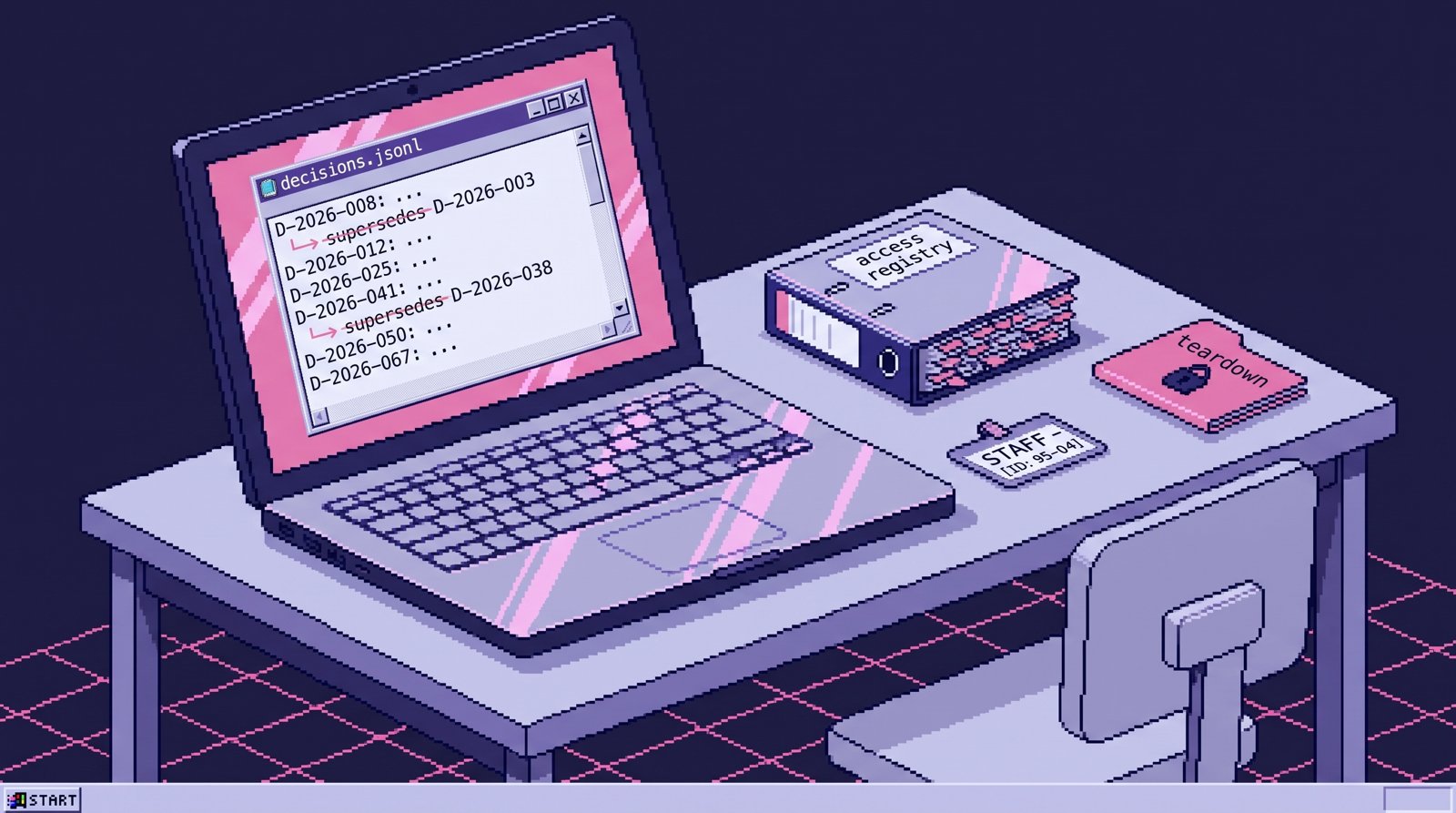
An append-only log of decisions that constrain future work: how a kind of project is priced, what a retainer covers, what the AI may never do. The proposal and estimate skills read it before they write anything.
2026-07-14 · The AI never sends client email. Drafts only.
2026-08-02 · Retainers cover 10 hours. Overage is billed monthly.
Write down the rulings ›
fernhill_brain / access /
One page per platform: who has access, MFA status, what it costs. The AI asks whether to update it whenever a new tool comes up. When two contractors left, offboarding was a checklist instead of a memory test.
Where tribal knowledge hides ›fernhill_brain / skills /
Each job, written down as instructions: call to proposal, lead to reply, the end-of-day catch-up. In Claude Code they live in .claude/skills, and in the Claude app each one is a skill your team adds. Write one for each job someone does every week. Skills written for imagined jobs rot, and we deleted 52 of ours.
Why we deleted 52 skills ›fernhill_brain / skills / day-end.md
Reads the day's meetings and email, files what matters, drafts the replies, proposes tasks and flags anyone still waiting on you. We start ours by hand each evening. A scheduled task can run it, and Claude Duet's morning brief covers the one-person version.
1. Read today's calls and email for this person
2. File each one in its client folder
3. List every thread where someone is waiting on us
4. Draft those replies. Never send.
Claude Code as a chief of staff ›
fernhill_brain / connectors.md
Which tools it connects to, read or write, and who approved it. We wrote ours before anyone connected the books.
Gmail: read, drafts only
Drive: read
QuickBooks: read, reports only
Is it safe to connect QuickBooks? ›
A brain that depends on someone remembering to paste things into it stays empty. Ours is fed by scheduled jobs and one command each founder runs at the end of the day.
| Task | Schedule | Last result |
|---|---|---|
| Sync email | Three times a day | 1,295 emails filed by client |
| Pull meeting transcripts | Every hour | 727 transcripts so far |
| Confidentiality gate | Before any transcript is saved | A required check on every pull request |
| Day-end process | Each founder, end of day | 39 runs, 460 meetings, 1,420 email threads |
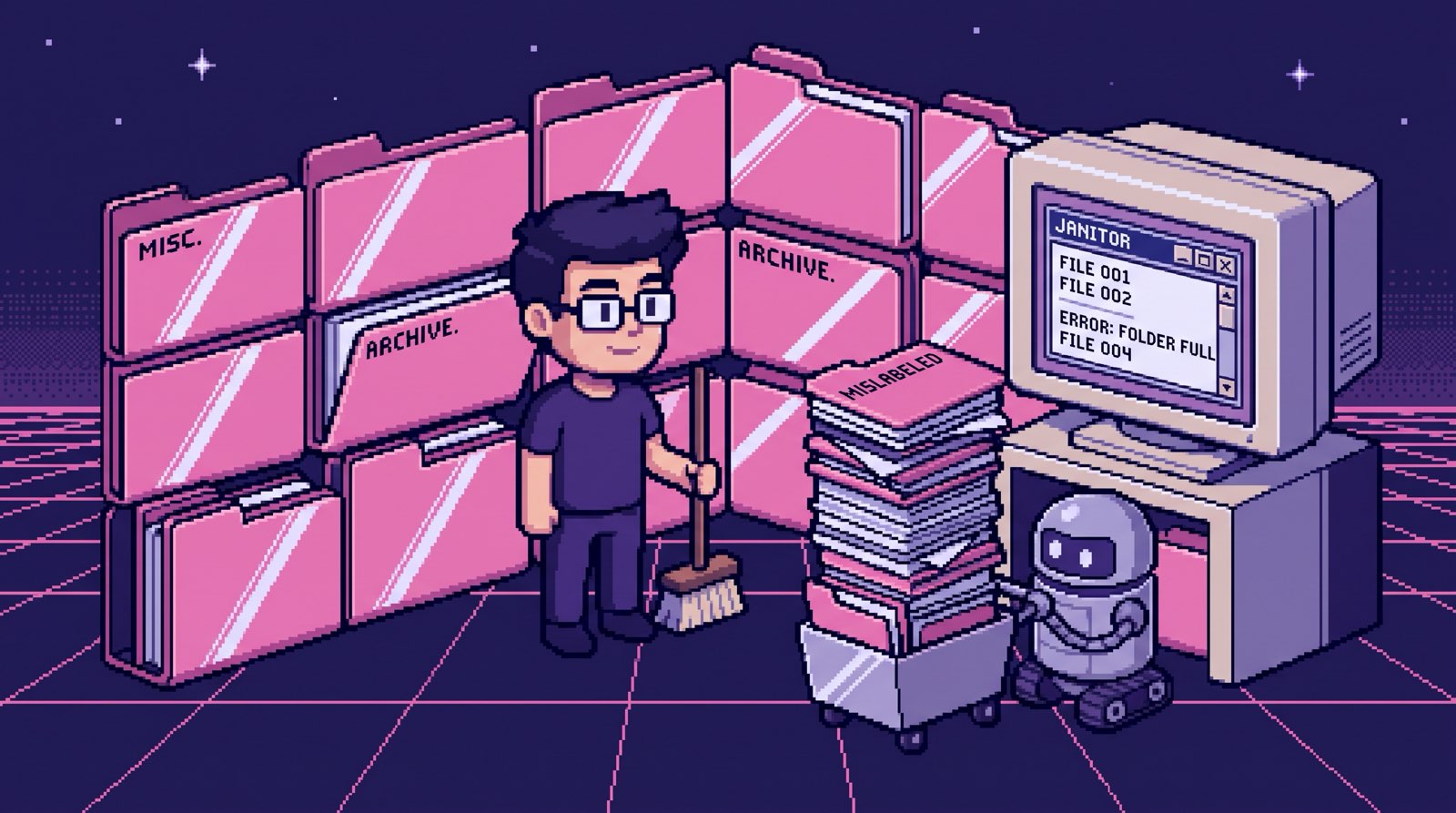
| Nightly janitor | Nightly | 245 open findings, no pull request since Aug 6 |
Feeding it is automated. Keeping it tidy still takes a person: the janitor won't move a file something links to, and most of its findings are exactly that. The janitor's numbers.
A second brain is one person's notes with an AI on top. It works well right up until a second person writes to it.
When we started logging company decisions in July, six of the first ones came out of one person's private AI memory. One was the rule that the AI never sends client email. It had been governing that person's sessions and nobody else's.
| Second brain | Company brain | |
|---|---|---|
| Who writes to it | You | Founders, teammates and scheduled jobs |
| Where the rules live | Your head, or your AI's private memory | One file everyone's AI reads |
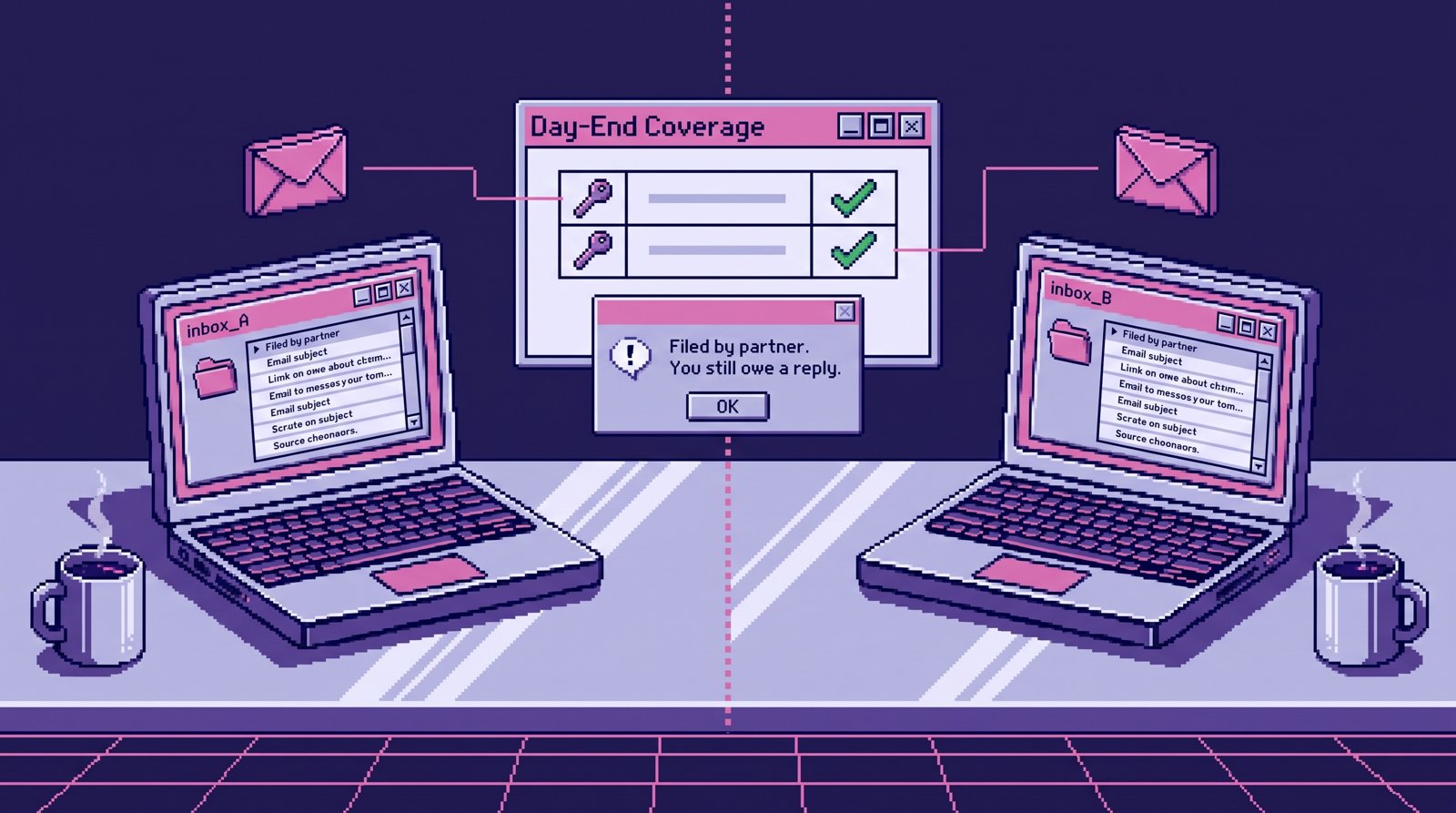
| The same meeting | Filed once | Filed twice, unless both runs share keys |
| Who sees what | Everything you can see | Each person sees only their clients |
| When someone leaves | Not a problem | A checklist against the access registry |
All of these stop at answering questions. At Nexrizen, ours does the work too: a discovery call becomes a proposal with a prototype the same week, and every evening the day's action items turn into tasks with the replies already drafted.
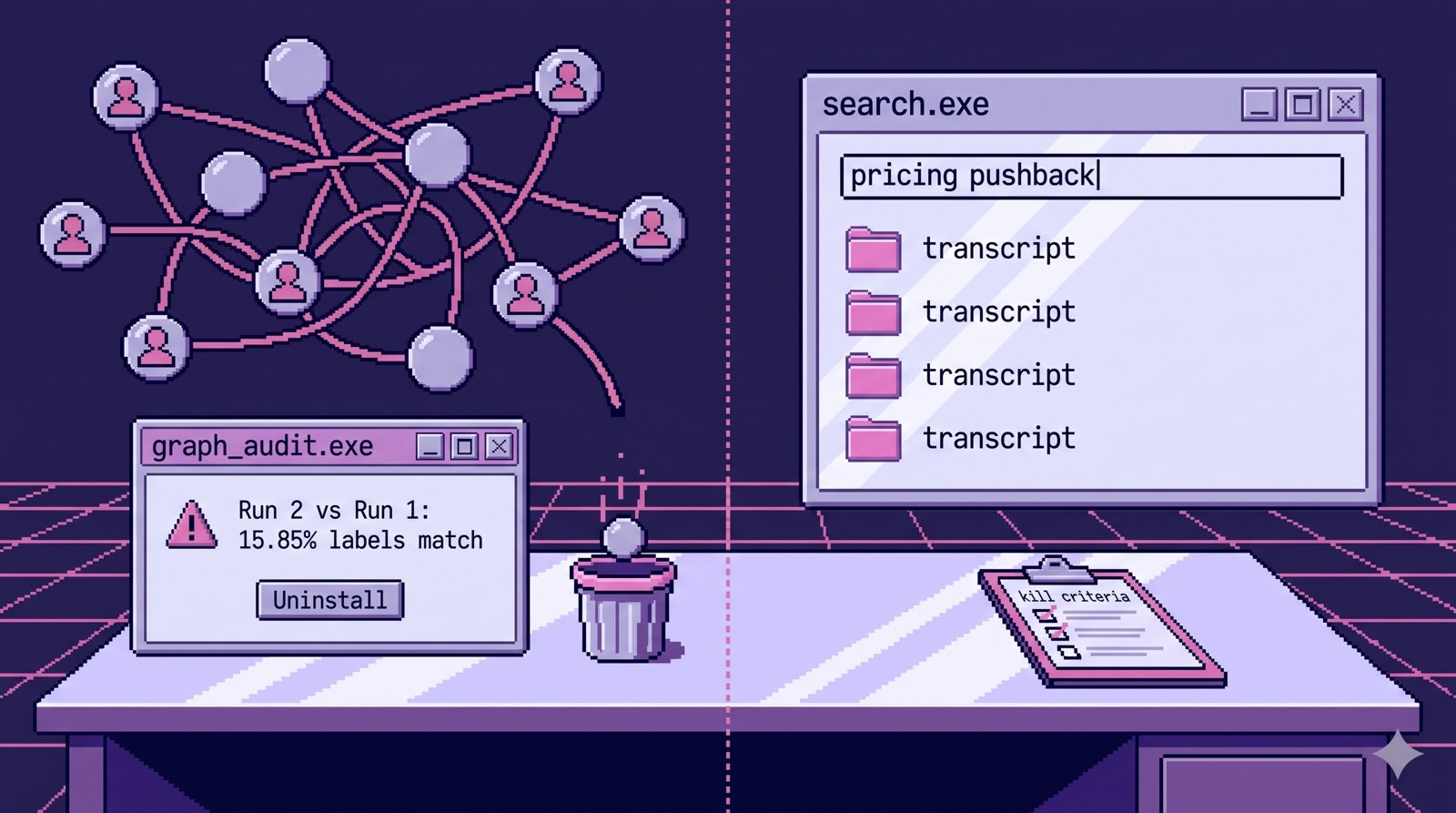
Do you need a knowledge graph on top? We tested one on 46 real documents and turned it off: two identical runs agreed on 16% of the labels. The test.
All of these happened to ours, and each one has a write-up with the numbers.
Two identical runs agreed on 16% of node labels. A graph that renames itself every night can't be trusted.
Created 1,042 tasks in four months. Fixing it took a script, not a better prompt.
46 confidential transcripts reached main. The gate worked. It just wasn't in the way.
Three feedback loops built to make it learn. Two months later, two logs were empty and the third never fired.
Called a job "Planned" that was running every weekday. The AI believed it, and a new report nearly went blind to overdue projects.
Couldn't see 19 of 36 databases for months, and nobody noticed.
None of it made the brain less useful day to day. It does make the honest pitch smaller than most: it answers with sources and drafts the work. It doesn't improve itself on its own, whatever the brochure says.
If you're one person with good notes, probably not. Tick what's true for your team.
of 6 are true for your team
You probably don't need one yet. A good notes app and a CLAUDE.md will carry you a long way.
Start with one folderStart small: one folder per client, email and calls syncing in, and one file for decisions.
Plan it for your tools, freeYou'd use one every day. See what it does with an agency's files, then plan yours.
Try the demoThe name is new. The pieces have been arriving for years, and each one fixed part of the last one.
Enterprise search
Glean is founded to search across all of a company's tools at once. Finding things gets easier. Keeping them right is still your job. Source ↗
Building a Second Brain
Tiago Forte's book makes personal knowledge systems mainstream. One person, one set of notes. Source ↗
Context graphs
Foundation Capital argues the valuable record is why decisions were made, not only what happened. Source ↗
The LLM wiki
Andrej Karpathy posts a pattern where an AI keeps a markdown wiki current instead of searching raw files every time. Source ↗
GBrain
Garry Tan open-sources the memory layer he built to run his own AI agents. Source ↗
A brain that does the work
Context and connectors, plus skills that turn them into proposals, replies and follow-ups, sized for a team of 20.
Oct 14, 2026 · 8 min read
A company brain is one place AI reads your email, calls and docs, and answers with the source. Here's ours after 3,474 commits, and what still breaks.
Read moreOct 12, 2026 · 7 min read
Start with a folder of markdown and a CLAUDE.md. Once a team wrote to ours, we added folder rules, a hook and a nightly janitor. It still has 245 findings.
Read moreSep 30, 2026 · 7 min read
My co-founder and I each run an AI day-end process over the same clients. Keeping it from filing everything twice took a shared table and cross-inbox keys.
Read moreOct 10, 2026 · 8 min read
Our decision log is one append-only file of rulings our AI loads before drafting proposals. Six of the first came from one person's private AI memory.
Read moreAug 6, 2026 · 7 min read
We piloted an LLM knowledge graph on 46 documents with kill criteria set first. 89% of edges were true, but a rerun matched 16% of labels. Search won.
Read moreOct 9, 2026 · 6 min read
Tribal knowledge is what your team knows and never wrote down. Ours hid in five places, including a README that said 73 rules when the file had 151.
Read more