Craft vs Outcomes: The Real Divide AI Is Exposing
Dec 28, 2025 · 4 min read
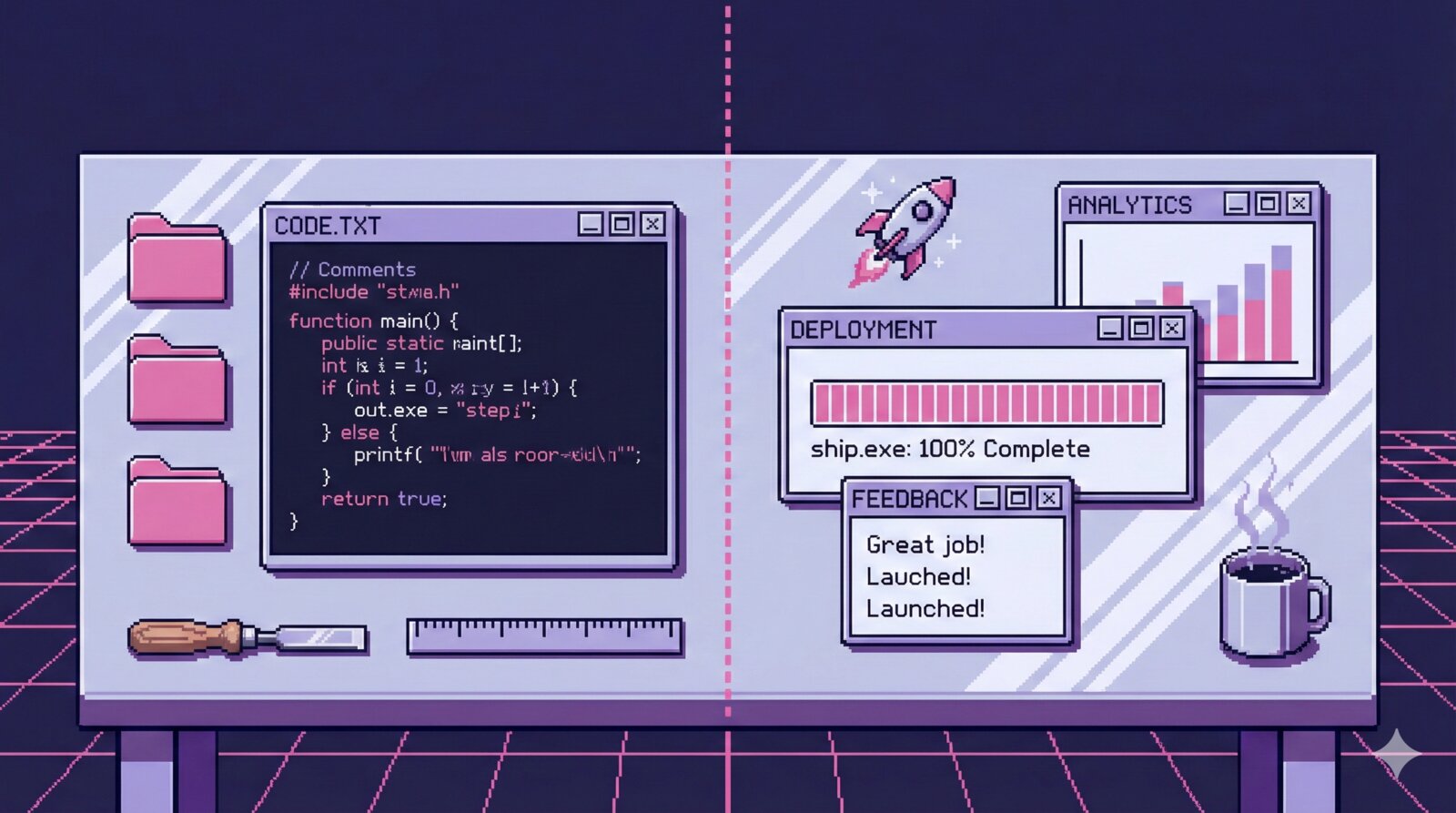
There’s a divide in software development that’s always existed but rarely gets named. Some developers fall in love with the craft itself, the elegance of a well-factored system, the satisfaction of a clean abstraction. Others just want to ship something that works and move on to the next problem.
I’ve worked with both types for years. The tension between them used to simmer quietly. AI is turning up the heat.
The Economics Changed
Writing code used to be expensive. When implementation takes 10 hours, every shortcut matters, every abstraction that saves future time earns its keep, and deep fluency with a language or framework translates directly into speed.
When implementation takes 10 minutes, a lot of that calculus breaks down.
I watched a developer on a team I advise spend most of a day writing a beautifully architected data transformation pipeline. Clean separation of concerns, well-named functions, comprehensive error handling. Meanwhile, another developer on the same team generated a working version with AI in about 20 minutes, reviewed it, cleaned up the rough edges, and moved on to the next feature.
The elegant version was genuinely better code. But the pipeline processes a nightly CSV import that nobody looks at unless it breaks. Six months from now it’ll probably be rewritten anyway when the data format changes. The “worse” version was the right call.
Where Craft Still Wins
That story might sound like I’m dismissing craft. I’m not.
I’ve seen the opposite play out too. A startup I worked with let AI generate most of their authentication layer, and the code worked fine until it didn’t. The edge cases around session management and token refresh were subtly wrong in ways that only showed up under load. Fixing it cost them a week of downtime debugging and a painful incident with a key customer.
Authentication, payment processing, public APIs, anything security-critical or customer-facing: these are places where understanding the code at a deep level pays for itself many times over. Craft isn’t a luxury there. It’s load-bearing.
The developers who care about clean architecture, who think about failure modes, who refactor until the system is easy to reason about, they’re invaluable when the stakes are high.
Where Craft Becomes a Trap
The problem is when craft orientation becomes a default mode rather than a deliberate choice.
I’ve seen teams spend weeks perfecting internal admin tools that three people use. I’ve watched developers resist AI tooling because it produces code that’s “not how I would write it,” even when the output is correct and readable. I’ve sat in code reviews where the feedback was essentially aesthetic: rename this variable, extract this into a helper, use a different pattern. All technically valid. None of it moving the product forward.
The craft instinct is powerful, and it doesn’t have an off switch. When your identity is built around “I write good code,” it’s hard to accept that sometimes good enough is actually better than good.
What AI Actually Changes
AI didn’t create this divide. It just made the costs visible.
When everyone writes code by hand, the craft-focused developer and the outcome-focused developer both spend similar amounts of time on implementation. The craft developer produces better code, and the time difference isn’t dramatic enough to force a conversation about priorities.
AI blows that gap wide open. The outcome-focused developer finishes in a fraction of the time. Suddenly the team has to reckon with a question that was always there but easy to avoid: what are we actually optimizing for?
The answer is context-dependent. A fintech startup handling money needs more craft in its core systems than a marketing site that’ll be redesigned in a year. The right approach changes based on what you’re building, who’s using it, and how long it needs to last.
Learning Doesn’t Disappear, It Moves
One thing that gets lost in the AI discourse: the skills that matter are shifting, not shrinking.
Knowing loop syntax matters less. Knowing whether you should build the system at all matters more. Understanding API semantics matters less. Understanding how your architecture will evolve as the business grows matters more.
The developers who thrive with AI aren’t the ones who stopped learning. They’re the ones who redirected their learning toward problem decomposition, system design, and understanding the business domain. The fundamentals didn’t change. The layer they operate at did.
The Honest Version
I used to be firmly in the craft camp. I took pride in elegant code, spent extra time making things clean, and genuinely enjoyed the puzzle of finding the right abstraction.
I’ve shifted. Years of shipping products taught me that a working thing in front of real users generates more insight than a beautiful codebase nobody’s using yet. AI accelerated this shift because it made the tradeoff starker, but the underlying lesson was already there.
The best developers I work with have figured out how to be deliberate about when each mode applies. They write careful, well-tested code for the core systems that hold everything together. They move fast and accept imperfection for everything else. AI makes that split easier to execute, because the “move fast” part got dramatically faster.
The question isn’t really about elegance versus outcomes. It’s about whether you’re choosing your approach consciously or just defaulting to what feels comfortable.
More Thoughts
Microservices: The Coordination Tax Nobody Talks About
Dec 28, 2025 · 3 min read
Twilio Segment killed 140 microservices. Here's why microservices fail long before they scale, and the warning sign most …
Read more
LLMs and the Control Flow Problem: Why AI Agents Fail at the Unexpected
Dec 18, 2025 · 3 min read
OpenAI-style transformers hit 99.7% accuracy on a problem harder than most benchmarks, and the reason why exposes a flaw …
Read more
AI Agents as Force Multipliers: Why Developers Are More Valuable Than Ever
Sep 18, 2025 · 2 min read
AI coding agents amplify expertise rather than replace it. The fundamentals of software engineering matter more than …
Read more
AI Adoption in Legal Tech: What I Learned at a Legal Conference
Jul 18, 2025 · 3 min read
I walked into a legal conference ready for some serious eye-rolls about AI. Boy, was I wrong. The legal industry is …
Read more